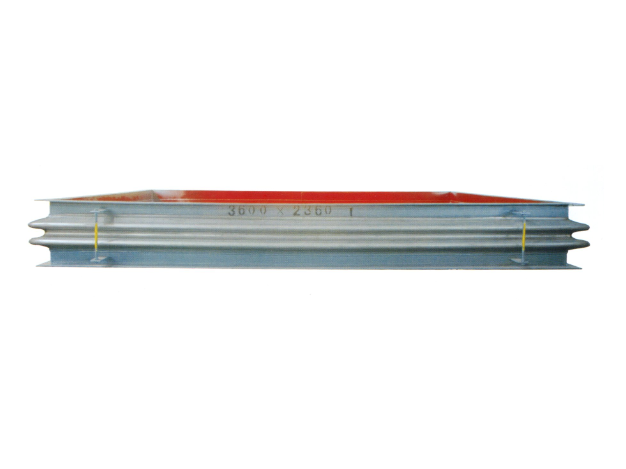
Metal rectangular expansion joint
Product Introduction
Product introduction of metal rectangular expansion joint
Product Structure and Composition
Metal rectangular expansion joint (also known as rectangular corrugated compensator) consists of the following core components:
- Bellows: Made of stainless steel (such as 304, 316L, 321, etc.) or low alloy steel, as the main component to compensate for displacement, it can absorb the multi-directional displacement caused by thermal expansion, contraction and vibration of pipeline.
- Flange/Receiver: Used for connecting pipes, usually made of carbon steel or stainless steel, supporting welding or flange connection.
- guide tube: Built-in deflector or deflector to reduce the erosion of media to the bellows and prolong the service life (default configuration, user can request to cancel).
- Tie rod/limit device: Some models are equipped with a tie rod or limit structure to prevent excessive deformation and enhance stability.
II. Core Functions and Advantages
- Displacement compensation capability:
- It can compensate axial, transverse and angular displacements, especially for large-section pipeline systems.
- The amount of single wave compensation is different according to the structure (full height type ± 24mm, half height type ± 12mm).
III. Application fields
Mainly used in pipeline systems in the following industries:
- Power industry: Boiler smoke duct, gas turbine exhaust system, desulfurization and denitrification pipeline.
- Steel and Metallurgy: Blast furnace hot air duct, dust removal system, waste gas discharge duct.
- Petrochemical industry: High temperature gas delivery, heat exchanger connection, pressure ventilation system.
- Cement and Environmental Protection: Kiln flue, inlet and outlet of dust removal equipment, dusty gas pipeline.
4. Material selection and type
- Material selection:
- Stainless steel: Suitable for corrosive media or high temperature environment (such as 316L, 310S).
- Carbon steel/low alloy steel: It is used in general working conditions and has better economy.
2. Structure Type:
- Single bevel V-type: Economical, suitable for low-pressure, low-cycle scenarios.
- Double bevel V-shaped: Longer service life, medium and high pressure working conditions are preferred.
- Rounded U-shape: High voltage, high reliability demand scenario, high cost.
- Corner design:
- waveform: U-shaped wave, V-shaped wave, UV combined wave, selected according to displacement amount and pressure.
V. Design and selection parameters
Users need to provide the following parameters to customize the product:
- Interface Size: Rectangular pipe length × width (e.g. 300×300mm to 6000×6000mm).
- Operating condition parameters: Design pressure, temperature, medium (e.g. dusty gas, corrosive fluid).
- Compensation amount requirements: Axial, lateral, or angular displacement.
- Connection mode: Flange size (required to be supplied in pairs) or welded interface.Installation and maintenance
- Installation Points:
- Forced deformation is prohibited to adjust pipeline deviation to avoid damage to bellows.
- The expansion joint with the inner sleeve should ensure that the medium flow direction is consistent with the direction of the guide tube.
- Check the corrosion and deformation of bellows regularly, and replace the aging parts in time.
- After removing the transport fixing member (e.g. the yellow tie rod), adjust the limit device to the working position.
Technical Standards and Certification
- Execution standard: GB/T 12777-2008, EJMA (American Association of Expansion Joint Manufacturers) optimized design.
- Third-party inspection reports (e.g. fatigue life test, sealability verification) can be provided.
Summary of technical advantages: With large compensation amount, high temperature resistance and modular design, metal rectangular expansion joint has become the core compensation element of complex pipeline system, which can significantly reduce maintenance cost and improve safety.
Looking forward to working with you
If you have any questions about our products or services, please feel free to contact us