1. Why can't the flue of the absorption tower be separated from the expansion joint? Find out the working conditions first
In the wet desulfurization system, the flue expansion joint of the absorption tower is not an optional accessory, it is life-saving. Think about it. From the original flue gas to the net flue gas, the temperature of the flue plummets from 130-150℃ to 45-55℃. How big can the displacement of thermal expansion and contraction of the pipe be? I have seen a clean flue of a 300MW unit with a difference of more than 40 mm in axial expansion and contraction between cold and hot states, and a lateral offset of more than ten mm. Without expansion joints, welds and flanges cracked early.
That's not the end. The humidity of the flue gas at the outlet of the desulfurization tower is close to saturation, with a large number of acidic droplets (pH as low as 1-2), and the metal pipe is directly exposed? Piercing in half a month. The first role of the expansion joint here is to compensate for displacement, the second role is to isolate vibration, and the third-which many people ignore-it has to be corrosion-resistant. Therefore, before the selection, it is necessary to find out all the medium temperature, pressure, moisture content, corrosiveness and flue cross-section size. Don't go up with the general-purpose model, that's digging a hole for yourself.
2. Rectangular non-metallic expansion joint VS metal corrugated expansion joint, who is more suitable for wet desulfurization?
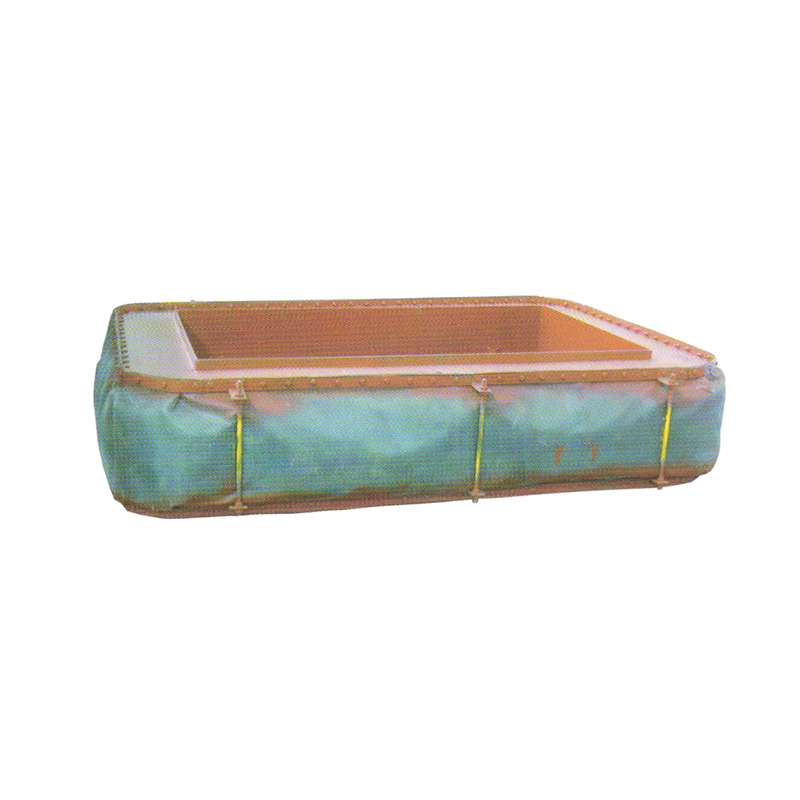
It's a cliche question, but someone still rolls over every time you select a model. Let me say the conclusion directly: For the rectangular flue at the outlet of the absorption tower, the first choiceRectangular non-metallic expansion joint(also called fabric fiber expansion joint). Why?
- Corrosive environment: The skin of non-metallic expansion joints is mostly made of fluororubber and polytetrafluoroethylene composite layer, and its acid and alkali resistance far exceeds that of 304 stainless steel. Under the wet desulfurization condition of metal corrugated expansion joint, even 316L, chloride ion stress corrosion cracking is a high probability event.
- Compensation capacity: Non-metallic expansion energy saving absorbs multi-dimensional displacement-axial, transverse and angular, and has low stiffness and small thrust on pipelines. Metal corrugated expansion joints (e.g.Universal corrugated expansion joint) It is mainly good at axial compensation, and it is easy to become unstable when the lateral displacement is large.
- Maintenance costs: The non-metal skin belongs to wear parts, but it is easy to replace and does not need to move the flue. Once the metal bellows is cracked, it has to be hoisted as a whole, and the downtime is calculated by day.
Of course, metal corrugated expansion joints are not without merit. For example, in the high-temperature section (≥150℃ on the original flue gas side), or when it needs to bear a large positive pressure (> 5kPa), the non-metallic skin may not be able to bear fatigue. Then you have to useCorrugated expansion joint for power station industryWhich is lined with a flow guide tube and an anticorrosive coating. But remember, don't putHigh-temperature axial expansion joints are used in low-temperature and high-corrosion zones, even if it looks more "strong".
3. The three most easily overlooked details in the design stage: guide tube, limit tie rod and anti-corrosion lining
Two days ago, a friend who is an EPC complained to me that the flue expansion joint of the absorption tower in their factory leaked after less than half a year. I asked him to send the design, and at a look, all three pits were stepped on.
First, the guide tube.Don't think the deflector is just an ordinary liner. Its function is to guide high-speed smoke away and avoid direct erosion of bellows or skin. However, in order to save cost, many designs have insufficient length of the guide tube, or no guide plate is set. As a result, the flue gas directly hits the expansion joint body with gypsum slurry, and it wears out in one month. OurSpecific Function of Expansion Joint Guide TubeAs detailed on the product page, the key is that the barrel of the guide barrel must extend beyond both ends of the expansion joint and maintain an appropriate clearance from the inner wall of the pipe.
Second, the limit rod.Many scenes reflect that the loosening of the tie rod leads to excessive compression of the expansion joint. In practice, the role of the tie rod is to restrict the bellows from working within the allowable expansion and contraction range while withstanding the internal pressure thrust. However, if you only install the tie rod and forget to calculate the cold tightness during design, or the tie rod nut is not adjusted in place, problems will occur. After installation, the tie rod nut must be adjusted according to the instructions, and anti-loosening measures must be applied. For specific operation methods, please refer to our question and answer on how to adjust the expansion joint tie rod nut.
Third, anti-corrosion lining.Especially the inner wall of the metal corrugated expansion joint must be lined with rubber or PTFE. Although the non-metallic expansion joint itself has an anti-corrosion layer, the flange connection surface is easy to become a weak point of corrosion. It is recommended to add to the flange surfacePTFE-lined hoseOrPTFE compensatorActs as an auxiliary seal to prevent acid from seeping into the bolt holes.
4. Installation and maintenance: Should the expansion joint screw be disassembled? How to adjust baffle door linkage?
Does the screw of the expansion joint need to be removed?The answer is – look at the stages. The screw is a fixture during transportation and installation, which is used to prevent the bellows from deforming during hoisting. After installation in place and pipeline connection, the screw must be loosened to leave space for thermal expansion. If you forget to dismantle it, as soon as the pipeline heats up, the screw will jam, and the expansion joint will be directly scrapped. Of course, some tie-rod expansion joints (such asLarge tie rod expansion joint) The screw is a permanent structure and cannot be disassembled, only the nut height can be adjusted. So be sure to read the product description.
Let's talk about the flap door linkage.Desulfurization flue gas baffle door(includingDouble-sealed single-axis circular baffle doorAndSingle-axis double-flapper door) are usually installed adjacent to the expansion joint. The key of adjusting the linkage is to ensure that when the baffle door is fully opened, it does not interfere with the guide tube inside the flue; When the baffle door is closed, the pressing force of the sealing surface is uniform, and the baffle door cannot be stuck or leaked due to the displacement of the expansion joint. We suggest setting an independent fixing bracket between the baffle door and the expansion joint, so that the displacement of the expansion joint is not transmitted to the door body.
5. Real case: The flue expansion joint at the outlet of the absorption tower of a power plant is cracked. What is the root cause?
Tell me the truth. During the overhaul of a 2×350MW coal-fired unit in North China in 2022, it was found that the skin of the rectangular non-metallic expansion joint of the clean flue at the outlet of#2 absorption tower was cracked in a large area, and the flue gas leakage was serious. At that time, the owner's first reaction was that the product quality was not good. We went to the scene to investigate and found three problems:
- Wrong selection: The original design usedrubber compensator(rubber PTFE type), but the actual peak operating temperature reaches 90℃, far exceeding the upper temperature resistance limit of rubber (usually ≤80℃). The rubber layer is aged and cracked, and the corrosive medium penetrates into the fabric layer from the crack.
- Installation deviation: The flange surfaces on both sides of the expansion joint are uneven, and one side is 8mm higher, resulting in unilateral compression of the skin and a sudden drop in fatigue life.
- Loss of limit: The settlement of the flue support caused the expansion joint to bear additional tensile displacement. The design compensation amount was only ±50mm, but the actual tension reached 70mm.
How was it solved in the end? Replaced withRectangular non-metallic expansion joint(The skin is multi-layer composite with PTFE + aluminum silicate fiber cloth), an auxiliary limit rod is installed, and the flue support is re-checked. After the replacement, it ran for two years without any problems. Therefore, don't wait for the shutdown to regret it-selection, installation and maintenance can't be saved.
6. Type selection list and common misunderstandings: Do not use high-temperature axial type in low-temperature and high-corrosion zone
Finally, a practical list to help you avoid pits:
- Raw flue gas at absorption tower inlet (high temperature section, 150~180℃): RecommendedCorrugated expansion joint for power station industryOrMetal rectangular expansion jointWith a guide tube and thermal insulation layer, the material is heat-resistant stainless steel (such as SUS310S).
- Clean flue gas at the outlet of the absorption tower (low temperature and high humidity corrosion section, 45~60℃): First recommendationRectangular non-metallic expansion jointOrNon-metallic expansion joint (fabric fiber expansion joint)Acid resistance and chloride resistance of the skin must be verified.
- GGH (flue gas heat exchanger) inlet and outlet: Large temperature fluctuation, both high temperature and low temperature corrosion risk, it is recommended to useCompound hinge transverse expansion jointOrCurved tube pressure balance expansion joint, with metal bellows + external anti-corrosion coating.
There are three common myths:
thinkUniversal corrugated expansion jointIt's all-powerful. In fact, it is only suitable for axial compensation, has extremely poor ability to lateral and angular displacements, and cannot be used in corrosive media.
Blind pursuit of "cheap". Non-metallic expansion joints are indeed cheaper than metal ones, but if it is high pressure, high temperature or frequent start-up conditions, the non-metallic skin life will be greatly reduced. Spend more money at this timeFlue gas baffle doormatchMetal corrugated expansion jointThat's the right answer.
Ignore the "water hammer" and vibration. Wet desulfurization flue often has liquid accumulation, and water hammer impact occurs when the machine is stopped and restarted, which causes great damage to the expansion joint. The drainage device should be considered in the design, and the dynamic safety factor should be reserved in the selection of expansion joint.
Alas, having said so much, it is actually a sentence: there is no standard answer for the selection of flue expansion joint of absorption tower, only a customized scheme for working conditions. If you are now overwhelmed by flue leakage and shutdown for emergency repair, you might as well look back at the details just mentioned-is the deflector installed or not? Is the pull rod adjusted? Is anti-corrosion lining reliable? Figuring these out is a hundred times better than changing brands everywhere.